
If you are completely new to thermal and night vision then
this is the blog for you! The world of digital scopes and spotters is fast
moving with a wide variety of options. We have broken down the main differences
here to help you make an informed decision.
Night Vision or Thermal?
Night vision uses image intensification technology, but with
an added source of infrared (IR) light (illuminator) to enhance visibility in
complete darkness or extremely low-light conditions. Your vision is limited to
the beam of the IR and the quality of the device. Animals can see IR light but
are usually unbothered by it but can soon become shy of the beam, much like
they can become lamp shy. Night Vision is used in the dark and the image you
see is black and white. The image is usually quite detailed and shows up
branches and vegetation between you and the animal. Eyes shine like they do in
a lamp but you can also miss animals if they are partially hidden and still. NV
is generally less expensive for the image quality you get.
Thermal imaging is a technology that creates images based on the heat emitted by objects. Unlike traditional night vision, which amplifies an IR torch, thermal imaging detects heat and converts it into a visual representation. Thermal will show animals that are partially hidden but they are not x-rays! If something is stood in thick cover without any direct line of sight then they won’t be seen. However, if something is tucked down with its ears showing you be aware there is something there, if not initially certain on what it is. Thermal can be used day and night and is a quicker way of locating animals than NV. It is more expensive than NV however, and entry level units don’t show up the details that NV will. Thermal units can have a variety of sensors specifications which is why units that look the same change in price dramatically. If you really can't make your mind up you can now also get spotters and scopes which have both NV and thermal in once device!

Spotters

We always advise customers get a spotter first. If you are
night shooting then your spotter replaces your lamp which you spend more time
looking down than a scope. We always recommend a thermal spotter over a night
vision one, as they allow for fast location of quarry and generally allow you
to look further distances. Having a spotter allows you to find quarry and get
into position before the animal is aware you are there. This gives you time to
get into a safe shooting position than will allow for a clean humane shot. There
is no point having an expensive digital scope when you still have to use a lamp
to locate as you don’t gain any time.
Thermal spotters are also brilliant for deer stalkers. As
well has speeding up locating deer they also help locate the carcass after the
shot. We hear people comment that using a thermal spotter for stalking is
“cheating” but they said the same about telescopic scopes when they came out
decades ago! They are now an essential tool for any professional stalker.
Identification can sometimes be a bit harder with thermal
but you can confirm when you look down your scope or binoculars, remember that
a spotter is there to help you locate without the animal knowing – you will
have plenty of time for a closer look.
Scopes

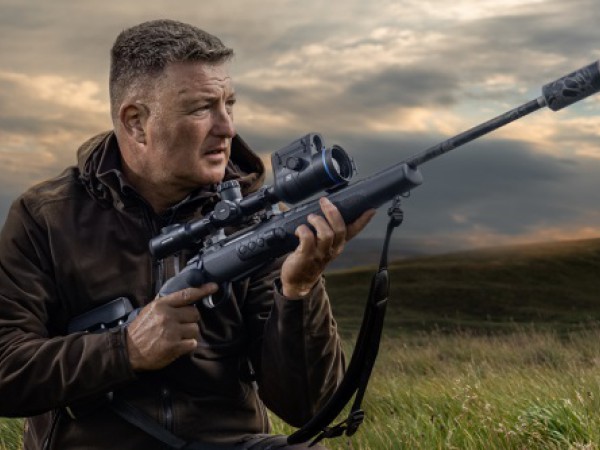
You can get different types of NV and thermal scopes. Most
nowadays look like traditional tube scopes and are fitted with rings, although
some older types are square units that are fitted on a special mount, usually
to a picatinny rail.
You can also get “add on” units in both, which attach to a
traditional glass scope. Some add to the front and some add to the rear. These are great for someone who uses a glass scope a lot but would like the
option of adding something for night time/low light. Bare in mind that both types are very scope
fussy so get advice on what scopes they work with before purchasing, else you
may end up having to swap glass scope to get the best out of the digital
device. Also, check that your current mounts leave enough space for the
adaptors to fit else they may need changing too. Add on units can sometimes
work out more expensive than first expected.
NV scopes are still more popular than thermal and it’s
partly down to price and partly down to image quality. As NV gives you a black
and white detailed picture in darkness you can ID quarry and make sure that there is a safe
shot to be had quicker than with a thermal at the same price point. They often have a coloured daytime image too. However
higher spec thermal is now also very detailed but at a higher price.
Animals can become shy of the IR light used for NV. If
someone misses a fox while it has been lit up with an illuminator then it
probably won’t sit as tightly next time. It’s worth baring in mind if lots of
NV is used locally to you as you may find the foxes are spooky if you use the
same. As thermal does not require an illuminator you do not get this issue and
animals cannot become shy of something they cannot see.
Illuminators that are included with NV devices are limited
due to import regulations. They may work well for airgun and rimfire distances
but can sometimes run out of viewing distance for centrefire rifles. People
often use aftermarket IR illuminators that are stronger. These will need a
mount to attach them, which often sticks out to the side, or above the NV
scope.
Battery Systems
It is worth considering the battery system different units use as keeping the device charged ready to go will become part of your hunting preparations. Premium brand digital devices will have their own battery
and charging systems and will come with 1 years warranty. The batteries are
usually more expensive because of this but you know are of a decent quality.
Batteries are sometimes interchangeable between spotters and scopes too.
Be aware that some makes of device do not come with batteries or a charger so you need to get these before you rush out to try your new toy. You may need to have a few batteries for them to last a whole outing. Digital units normally run off rechargeable lithium-ion batteries, typically the size 18650. You can get these batteries with, or without a button top and protected or non-protected. Make sure you know exactly which you need before you buy. IR torches usually run off these as well – but again check which type.
Word of warning when buying and transporting batteries. Please buy from a reputable website. There are lots of cheap batteries on Ebay and Amazon – Lithium-ion batteries can be very dangerous and cheap ones even more so. It is better to buy genuine branded ones. Do not use or charge if you drop them onto a hard surface. Batteries can catch fire or explode if damaged. Do not leave on charge unattended. Do not store in your pockets – especially if you have ammo/coins/keys in them. They are supplied in hard plastic cases and should always be carefully stored in them. Don’t leave in vehicles in the summer when they could get too hot.
Warranty
Always look into any warranties offered with a unit. Most come with 3 years. Also find out if repairs happen in the UK or if they would have to be sent abroad for any issues.
Updates and Connectivity
Most devices are updatable like mobile phones. Some companies are better than others at supporting devices, even if they aren't the latest ones out. Most devices will also connect to smartphones/tablets and will allow you to download any images and videos you have taken and this is where you can check to see if you are running the latest firmware. It is amazing how much the image quality, and other usability factors can be improved on these updates.
Leave a Comment